






Temporary Fence Rental Essentials: Equipment, Supplies, and Setup

SONCO, July 22, 2024
Read more about the author


Starting a temporary fence rental business can be a profitable move for fence contractors and new entrepreneurs alike. Construction sites, special events, and municipalities all need reliable perimeter control on a recurring basis, which creates steady demand for rental fencing.
Before you can serve your first customer, though, you need the right inventory. This guide walks through the equipment, supplies, and accessories every temporary fence rental company needs, how to choose products built for repeated rental use, and how much inventory to budget for when you get started.
Key Takeaways
- A temporary fence rental fleet needs five core components: panels, clamps, feet, ballast, and gates.
- Chain link panels generally hold up better than welded wire under the wear and tear of constant rental use.
- Anchor bases and weighted ballast systems replace sandbags with a longer lasting, less labor intensive option.
- Choosing rental grade equipment reduces liability risk and protects your reputation with customers.
- Expanding into accessories like privacy screens and security add ons can increase revenue per job without buying new panel inventory.
What Do You Need to Start a Temporary Fence Rental Business?
At a minimum, a new rental company needs enough panels, feet, clamps, and ballast to complete a standard job, along with a vehicle to transport it. Most operators start with a modest inventory and grow it as demand increases.
The products you choose in the beginning matter more than they might seem. Rental fencing gets moved, stacked, loaded, and exposed to weather far more often than fencing installed permanently, so it needs to be built for that cycle. Buying the cheapest available panels or feet often costs more in the long run through repairs, replacements, and dissatisfied customers.
Poor quality panels are also easier for vandals or thieves to move or cut, which can put a customer's job site at risk. Even when a rental company is not held liable for the resulting damage, a customer who has a bad experience is unlikely to book again or refer new business.

Essential Temporary Fence Rental Equipment
Every rental fleet is built around a handful of core products. Below is what a new company needs to have on hand before taking on its first job.
Temporary Fence Panels
Panels are the foundation of any rental fleet, and the material you choose affects nearly everything downstream, from repair costs to how long the inventory lasts.
Chain link panels are typically the sturdiest option for rental use. They stand up well to being loaded, stacked, moved between sites, and exposed to different weather conditions. Welded wire panels can also work, particularly if they are reinforced with support bars or corner plates to resist warping, but the mesh tends to break down faster under repeated handling. That makes welded wire better suited to long term installations where the panels stay in place, rather than rental fleets that move constantly.
Repairs are another consideration. A damaged chain link panel can usually be fixed on site by cutting out the broken section and twisting in new fabric, a process covered step by step in our guide to installing a mesh chain link fence. Welded wire panels typically need to go to a welder, which adds downtime and cost. While welded wire is sometimes seen as more visually appealing,
chain link panels tend to deliver more usable rentals per dollar invested.
Crews new to assembly can also follow our walkthrough on setting up a temporary chain link fence panel for a full rundown of the process from unloading to final tensioning.
Clamps, Bolts, and Connectors
Clamps and their matching bolts and nuts hold adjoining panels together to form a continuous perimeter. Without them, panels can shift or be dragged apart, creating gaps that defeat the purpose of the fence.
A simple installation habit worth training your crew on is positioning the nut so the threaded side faces the interior of the fenced area. This makes it harder for someone outside the perimeter to loosen the clamp. It is also worth sourcing fence clamps with a rust resistant finish, since corroded hardware becomes brittle and easier to break.
Fence Feet and Bases
Fence feet, sometimes called fence bases, are what keep panels upright. Without them, there is no way to assemble a freestanding perimeter.
The most common option is a tube stand, usually made from galvanized steel with a zinc coating to resist rust. Because feet sit directly on the ground, they take on constant exposure to moisture, debris, and foot or vehicle traffic, so weatherized construction matters.
A simple rule of thumb for estimating how many feet you need is to take the number of panels in the perimeter and add one. A 50 panel job, for example, calls for 51 tube stands, since each stand typically supports the adjoining edges of two panels except at the single opening point, where a standalone stand allows that panel to swing open and closed.
Ballast and Anchor Weights
Ballast keeps a temporary fence from shifting or tipping in wind or when it is bumped. Some companies still rely on sandbags or cinder blocks, but these come with real drawbacks. Sandbags deteriorate quickly in sunlight, often lasting only a single rental cycle, and the labor involved in filling, transporting, and replacing them adds up fast.
Purpose built anchor weights are a more durable alternative. A single weighted anchor can typically replace ten or more sandbags and last for years, often made from recycled, recyclable plastic.
Some rental companies also use combination anchor bases that function as both the fence foot and the ballast in one unit, which simplifies inventory and setup. New operators weighing ballast options can also read our overview on renting temp fence with confidence for guidance on matching stability kits to different site conditions.
Temporary Fence Gates
Most fenced job sites and event venues need at least one point of controlled access. Without a gate, crews have to physically move panels every time someone needs to get in or out, which accelerates wear on both the panels and the feet.
It is worth stocking fence gates in a few sizes, since foot traffic gates and vehicle access gates serve different needs. For sites that need to move heavy equipment, a hinge and rolling wheel kit can convert a standard panel into a swinging gate, and two panels fitted with this kind of kit can form an oversized gate for large machinery.
Transportation and Handling Equipment
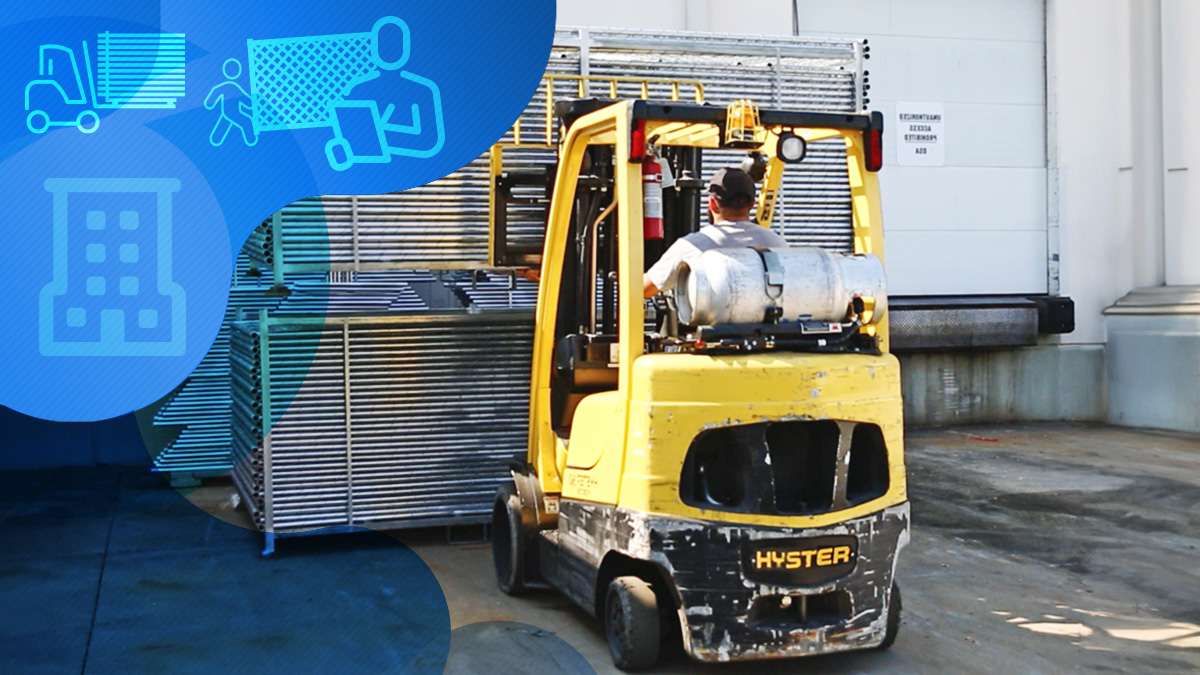
You will also need a truck capable of hauling panels, feet, and ballast between your yard and customer sites, which many fence contractors already own. As the business grows, a forklift becomes a worthwhile investment. It allows crews to move a full rack of panels at once instead of unloading piece by piece, which reduces both handling damage and the risk of injury to workers.

How to Choose Equipment for a Temporary Fence Rental Fleet
Not every product marketed for temporary fencing is built to survive rental use. Here is what to weigh when comparing options.
Durability
Rental equipment gets loaded, unloaded, dragged, stacked, and exposed to the elements far more than fencing that is installed once and left alone. Look for panels, feet, and hardware rated for repeated handling rather than single use installation.
Repairability
Equipment will eventually get damaged, whether from weather, vandalism, or normal wear. Products that can be repaired quickly and inexpensively, such as chain link panels with replaceable fabric, keep more of your fleet in rotation and reduce downtime between jobs.
Total Cost of Ownership
The cheapest product upfront is not always the cheapest option over time. Factor in how many rental cycles a product can realistically survive, how often it will need repair, and how much labor is involved in maintaining it, rather than judging equipment on purchase price alone.
Storage and Transportation
Equipment that stacks efficiently and loads quickly saves labor on every single job. Consider how panels, feet, and ballast fit together in your truck or yard, since bulky or awkward products slow down crews and increase the odds of damage during handling.
Customer Applications
Construction sites, special events, and government projects each come with different expectations. A construction customer may prioritize security and durability, while an event planner may care more about appearance. Choosing versatile equipment, or stocking a few product tiers, lets you serve a wider range of customers without overbuilding your fleet.
Temporary Fence Accessories That Can Expand Your Rental Offering
Once the core fleet is in place, accessories are one of the easiest ways to increase revenue per job without a major new investment in panels.
Privacy Screens
Privacy screens attach to standard fence panels and block sightlines into a job site or event space. They are popular with construction customers who want to shield work from public view and with event organizers who want a more finished, enclosed look. Adding them to your fleet can be a meaningful missed revenue opportunity for rental companies that only offer bare panels, and our guide on installing a privacy screen on a chain link fence walks through the setup process crews will need to follow.
Security Accessories
Add ons like anti climb mesh, tamper resistant clamp covers, and additional bracing give customers more confidence in the fence's ability to deter unauthorized access, which can be a strong selling point for high value or high traffic sites. For customers with elevated security needs, an anti scale fence option is worth stocking as a premium tier.
Branded Fence Solutions
Printed banners and wraps that display a customer's logo or event branding turn a functional fence into a marketing surface. This is especially popular with event venues and can often be offered at a premium over standard rental pricing. Custom printed wraps and banners are one option, and a custom privacy screen used for jobsite branding is another way to combine security with visibility for the customer's brand.
How Much Inventory Do You Need to Start?
Inventory needs scale with the size of job you plan to take on, but the table below offers a general starting point for a company beginning with construction and small event work.
These figures assume standard 6 to 8 foot panels and one access point per perimeter. Larger job sites or sites with multiple entrances will need additional gates and feet.
| Perimeter Size | Fence Panels | Fence Feet | Anchor Weights or Ballast | Gates |
| Small (100 ft) | 10 | 11 | 10 to 11 | 1 |
| Medium (500 ft) | 50 | 51 | 50 to 51 | 1 to 2 |
| Large (1,000 ft) | 100 | 101 | 100 to 101 | 2 to 3 |
How to Protect Your Temporary Fence Rental Investment
A rental fleet represents a significant upfront cost, so protecting it matters as much as building it. For a closer look at storage habits that make every panel last longer, see our tips on extending temporary fence rental lifespan. A few habits help extend the life of your inventory:
- Inspect panels, feet, and clamps for damage or corrosion after every job and before they go back into rotation.
- Store equipment off the ground and, when possible, under cover to limit exposure to moisture.
- Train crews on proper loading and stacking techniques to avoid bent panels or stripped hardware.
- Track which products are assigned to which jobs so damaged or missing equipment can be traced and billed appropriately.
- Choose rust resistant hardware and weatherized feet from the start, since replacing corroded components is more expensive than buying quality the first time.
How Much Does It Cost to Start a Temporary Fence Rental Business?
Startup costs vary based on how much inventory you buy upfront, whether you already own a truck, and whether you invest in equipment like a forklift right away. Most new operators start with enough panels, feet, clamps, and ballast to cover one or two mid sized jobs, then reinvest rental revenue into growing the fleet.
For a closer look at panel pricing and sizing options to help you plan a startup budget, see our chain link fence panel buyer guide.
Temporary Fence Rental Business FAQs
What type of fence is best?
Chain link panels are generally the best choice for rental fleets because they hold up better to repeated handling and are easier and cheaper to repair than welded wire.
How many bases do I need?
A common rule is to use one fence foot per panel, plus one extra to close the perimeter. A 50 panel job typically needs 51 feet.
Is temporary fence rental profitable?
Yes, temporary fence rental can be a profitable business, particularly because equipment can be rented out repeatedly across construction, event, and government customers once the initial inventory investment is made.
How long does temporary fencing last?
With proper care and storage, quality chain link panels, feet, and hardware can last for many years of rental use, though lifespan depends on handling, storage conditions, and how often equipment is inspected and maintained.
What accessories do I need?
Gates are essential for most jobs. Beyond that, privacy screens, security accessories, and branded banners are optional additions that can help you serve more customer types and increase revenue per rental.
Build Your Temporary Fence Rental Fleet With SONCO
Starting or expanding a temporary fence rental business is easier with a supplier who understands what rental fleets need to hold up over time.
SONCO offers chain link panels, tube stands, anchor bases, gates, and accessories built for repeated rental use, backed by nationwide distribution and delivery. Request a quote to get your fleet started.

Trend now

Temporary Fence Rental Lifespan: Tips to Make Your Fence Last Longer
Learn the storage habits that extend the lifespan of every panel.

How to Manage a Crowd at an Event: A Complete Guide for Event Managers
Learn how to manage a crowd at an event with proven strategies for planning, signage, barriers, staffing and more.

How to Install a Mesh Chain-Link Fence: Step-by-Step Guide
Learn how to install a mesh chain-link fence step by step.
Search for category
Request a quote now! 