






What Is a Stanchion? A Complete Guide to Crowd Control Posts

Nick Criscuolo, July 31, 2020
Read more about the author



A stanchion is a freestanding upright post used to create temporary boundaries, guide foot traffic, or restrict access to specific areas. Posts are connected by retractable belts, decorative ropes, or chains to form flexible queue lines and crowd-control barriers — without permanent construction.
You encounter stanchions constantly without necessarily registering them: the winding belt-and-post maze at airport security, the velvet rope outside a hotel bar, the bright yellow barrier across a warehouse aisle. They are so ordinary they become invisible — until you need to buy or specify them, at which point the number of variables can be surprisingly large.
This guide covers the full picture: types, dimensions, materials, queue-layout strategies, ADA considerations, and a checklist to guide your purchase.
Key Takeaways
- Stanchions help guide foot traffic, create boundaries, and manage queues without requiring permanent construction.
- There are four main types of stanchions: rope, retractable belt, wall-mounted, and safety/construction.
- The right stanchion depends on your environment and needs, including traffic volume, available space, appearance, and whether the setup changes frequently.
- Proper placement and layout are just as important as the stanchion itself for creating safe, efficient, and accessible queues.
What Are the Four Main Types of Stanchions and Their Uses?
Stanchions come in four main types: rope, retractable belt, wall-mounted, and safety/construction, and each is designed for a different environment.
Rope stanchions are best for polished, high-end settings like hotels and museums; retractable belt posts are the go-to choice for managing high-traffic queues; wall-mounted barriers save floor space in hallways and doorways; and safety/construction stanchions provide high-visibility crowd control in hazardous areas.
Choosing the right type for your setting is the most important buying decision.
Rope stanchion
Upright post with a hook at the top that accepts a looped decorative rope. Refined, photogenic, permanent-feeling.
Common rope lengths run 4–8 feet; common rope diameters are 1.5 inches (decorative) and 2 inches (heavier, more imposing).
Best for: hotels, museums, events.
Retractable belt
Internal spring mechanism extends a nylon or polyester belt to connect multiple posts. Fast, flexible, workhorse of high-traffic environments.
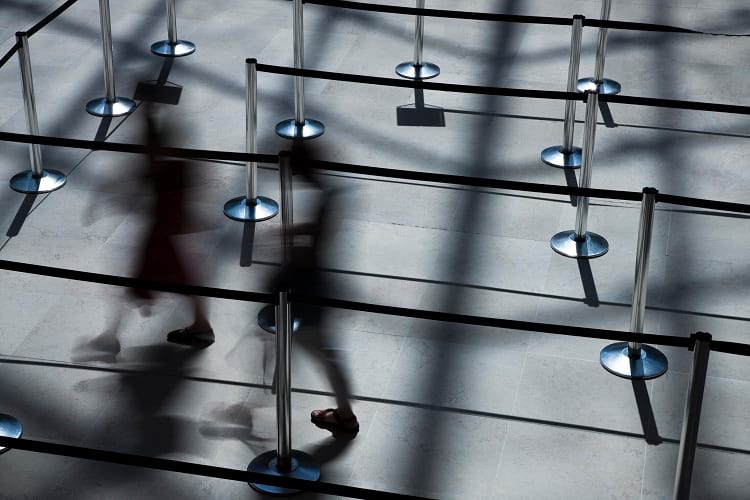
Most modern retractable posts include a multi-directional receptacle at the crown, letting a single post accept belts from up to four different angles simultaneously — critical for switchback queue layouts.
Belts range from 7 feet (standard) to 13 feet (wide-span) for freestanding models, and up to 30 feet or more for wall-mounted safety barriers.
Best for: airports, banks, retail
Wall-mounted
Housing unit fixed directly to a wall; belt extends and retracts without a freestanding post. Keeps floor completely clear.
Best for: hallways, doorways, clinics
Safety / construction
Heavy-duty posts with high-visibility belts (yellow, orange, red-white stripe). Often cone-mounted or twin-belt for wider coverage.
Best for: job sites, warehouses, hazard zones
| Type of stanchion | How it works | Best for | Key advantage |
| Rope stanchion | Upright post with a hook for a decorative rope | Hotels, museums, events | Elegant, polished appearance |
| Retractable belt | Internal spring mechanism extends a belt between posts | Airports, banks, retail | Fast, flexible, and ideal for high-traffic areas |
| Wall-mounted | Belt housing is fixed directly to a wall | Hallways, doorways, clinics | Keeps the floor completely clear |
| Safety / construction | Heavy-duty posts with high-visibility belts | Job sites, warehouses, hazard zones | High visibility and durable crowd control |
Key components of a stanchion system
- Post: The vertical column. Common materials: powder-coated carbon steel (affordable, heavy, durable), stainless steel (premium, corrosion-resistant, outdoor-safe), and lightweight aluminum (portable and easy to transport). Finishes range from chrome and brushed satin for hospitality settings to matte black and safety yellow for industrial use.
- Base Provides: stability against tipping. Cast iron bases (8–18 lb) are preferred for high-traffic or outdoor locations exposed to wind. Lighter aluminum bases suit indoor event use where portability matters more than tip resistance. Most bases include rubber floor protectors to prevent surface damage.
- Belt or rope: Retractable belts are woven nylon or polyester; some models offer high-visibility colors (yellow, orange) or printed custom messaging for branding or safety. Rope materials include velour (formal events), braided nylon (everyday use), and polypropylene (outdoor / wet environments).
- Receptacle / crown: The fitting at the top of the post where belts or ropes connect. Multi-directional receptacles (accepting connections from 2–4 angles) allow complex queue configurations from a single post. Low-end posts are single-directional, severely limiting layout flexibility.
- Optional accessories: Sign holders (clip or fork-mount, for wayfinding or pricing), literature trays, LED illuminated posts, chain connectors for outdoor use, and cone adapters for safety stanchions that need to be weighted without a traditional base.
Queue layout strategies
The stanchion is only as useful as the queue layout it creates. Choosing the wrong layout for the traffic volume or space shape is one of the most common mistakes — it results in line-ducking, bottlenecks, and frustrated guests.
- Straight line: Best for low traffic with a clear exit point. Easy to set up, easy to clear.
- Switchback: The standard for airports and banks. Doubles capacity in the same footprint; prevents line-ducking.
- Serpentine / maze: Maximum crowd capacity per sq foot. Research shows it feels faster to guests because forward progress is constant. Best for theme parks, stadiums, and event entry points.
A rule of thumb for post spacing: keep spans under 8 feet in high-traffic areas where line-ducking is a concern, and under 5 feet where the barrier also needs to be a visual deterrent (construction perimeters, VIP sections). Longer spans between posts save hardware costs but invite people to step under or between the belts.
Some ADA considerations
Under the Americans with Disabilities Act, queuing areas must maintain a minimum 36-inch clear passageway width (60 inches preferred for wheelchair passing).
Stanchion layouts should account for this: switchback turns need sufficient radius for wheelchair maneuvering, and belt tension should be low enough that it deflects on contact rather than being a trip hazard. Detectable-edge cues at entry points help guests with visual impairments locate the queue.
Before you buy: a decision checklist
Run through these questions before specifying a stanchion order. Each answer points toward a specific product choice.
- Indoor or outdoor: Outdoor use requires corrosion-resistant materials (stainless steel or powder-coated steel), polypropylene rope rather than velour, and heavier bases (14 lb+) that won't tip in wind. Standard chrome-plated posts corrode rapidly outside.
- How often will the layout change?: Daily reconfiguration favors retractable belts over rope (faster to connect and disconnect). Seasonal or one-time setups can use rope stanchions without penalty.
- Is appearance critical?: Lobbies, hotel entrances, and VIP areas warrant rope stanchions in brushed gold or satin chrome. Service corridors, warehouses, and back-of-house areas don't.
- How wide is the busiest span?: A 7-foot belt is the standard; choose 11–13 feet if your layout requires long spans between anchor points, or if you're covering wide hallways and want fewer posts.
- Do you need signage?: Many posts accept bolt-on sign holders for wayfinding (Queue here, Exit only, Please wait). Factor these in at purchase rather than retrofitting later — not all sign mounts are universal.
- Will you rent or buy?: For events that happen 1–3 times per year, renting is often more cost-effective than storing and maintaining a large stanchion inventory. Many suppliers offer event rental programs.
- Floor surface?: Polished marble and tile are vulnerable to base scratches. Specify units with rubber floor protectors, or add felt pads after purchase. Carpet provides more grip but can cause heavier bases to leave impressions over time.
Choosing the Right Stanchion for Your Space
Stanchions may seem simple, but the right system can have a major impact on safety, customer experience, and operational efficiency. Whether you're managing airport queues, creating a VIP event entrance, directing retail traffic, or securing a worksite, selecting the appropriate stanchion type, materials, and layout ensures smoother traffic flow and a more organized environment.
By understanding the differences between rope stanchions, retractable belt barriers, wall-mounted systems, and safety stanchions, you can choose a solution that fits your space, traffic volume, and branding goals. Factors such as durability, belt length, portability, signage options, and accessibility requirements should all play a role in your decision.

Find the Right Stanchion Solution with SONCO
Looking for a crowd-control system that combines durability, flexibility, and professional appearance? SONCO offers a complete selection of retractable belt stanchions, rope stanchions, wall-mounted barriers, and custom queue-management solutions designed for events, retail environments, transportation hubs, hospitality venues, and construction sites.
Browse our collection of stanchions today and find the right solution to improve crowd flow, enhance safety, and create a better experience for your guests and customers.
Answers to FAQs About SONCO Queue Solutions
1. Should I choose retractable belt stanchions, rope stanchions, or wall-mounted barriers?
The best option depends on your application. Retractable belt stanchions are ideal for high-traffic environments that require flexible queue layouts and frequent reconfiguration. Rope stanchions offer a more elegant appearance and are commonly used for VIP areas, red-carpet events, and upscale venues. Wall-mounted retractable barriers are a space-saving solution for hallways, elevators, maintenance zones, and other areas where floor-mounted posts may create obstacles or tripping hazards.
2. Can stanchions be customized with signs, logos, or messaging?
Yes. Many stanchion systems support custom branding and communication features. Retractable belts can be printed with logos, safety messages, directional instructions, or promotional content. Sign holders, brochure displays, banners, and graphic attachments can also be added to stanchion posts to provide wayfinding information, reinforce branding, promote sponsors, or communicate safety guidelines.
3. What are standard stanchions made of, and how durable are they?
Most retractable stanchion belts are made from durable woven nylon or polyester materials that resist wear and fraying. Rope options include velour for premium indoor environments, braided nylon for general-purpose use, and polypropylene for outdoor applications where weather resistance is important. Stanchions themselves are typically constructed from steel, aluminum, or other heavy-duty materials designed to withstand years of regular use in both indoor and outdoor settings.
4. How can I improve crowd control and prevent people from bypassing stanchions?
Effective crowd management starts with proper stanchion placement. Keeping posts spaced appropriately, using wider retractable belts, or adding secondary belts at lower heights can discourage people from ducking under barriers. For longer-term crowd-control needs, selecting the right stanchion type and configuring queue layouts strategically can improve flow, increase safety, and create a more organized customer experience.
Trend now

Temporary Fence Rental Lifespan: Tips to Make Your Fence Last Longer
Learn the storage habits that extend the lifespan of every panel.

How to Manage a Crowd at an Event: A Complete Guide for Event Managers
Learn how to manage a crowd at an event with proven strategies for planning, signage, barriers, staffing and more.

How to Install a Mesh Chain-Link Fence: Step-by-Step Guide
Learn how to install a mesh chain-link fence step by step.
Search for category
Request a quote now! 