
Event Crowd Management Planning: How to Build a Safer Strategy

Giuliano Marinho

Giuliano Marinho, July 26, 2019

Read more about the author
Event Crowd Management Planning: How to Build a Safer Strategy

A strong event crowd management plan covers nine core areas: expected attendance, venue layout, entry and exit points, high traffic zones, signage, physical barriers, staffing, emergency procedures, and event specific risks like weather.  

Planning should start as early as possible and involve local authorities, security contractors, and transportation providers, not just venue staff.

Crowd management is the set of decisions and physical measures that keep attendees safe and moving smoothly through an event or venue.  

Get it right and guests barely notice it's there. Get it wrong, and even a routine event can turn into a safety incident, or worse, a tragedy that draws regulatory scrutiny and liability.

This guide breaks down exactly what belongs in a crowd management plan, how to build one step by step, and the mistakes that trip up even experienced event teams. 

Key Takeaways

  • Plan early, involve outside stakeholders. Local authorities, transportation providers, and security contractors should be part of planning from day one, not brought in after the layout is finalized.
  • The crowd type changes the plan. A general admission rock concert needs a very different approach than a seated art show or a family friendly festival.
  • Barriers do more than block; they direct. Crowd control barriers work best when they make the "wrong" direction physically inconvenient, so attendees naturally flow the right way.
  • Staffing needs a division of labor. Security handles confrontation and enforcement. Event staff handle questions and guidance. Mixing the two roles slows both down.
  • Every plan needs a worst case scenario. Fires, medical emergencies, severe weather, and crowd surges all need a documented, rehearsed response, not an improvised one. 

What Should an Event Crowd Management Plan Include?

An effective crowd management plan documents how people will move through a venue, what could go wrong, and who is responsible for responding.  

The strongest plans address the following nine elements.

Expected Attendance and Capacity

Every plan starts with a number: how many people are expected, and what is the venue's safe maximum capacity? This figure drives almost every other decision, including how many staff you need, how many entry lanes to open, and how much barrier fencing to rent.  

Cross check ticket sales or RSVP estimates against the venue's licensed occupancy limit, and build in a buffer for walk ups or unticketed spectators when relevant.

Venue Layout and Crowd Flow

Map the physical space before you plan anything else. Identify natural chokepoints, such as narrow walkways, stairwells, and single doors, and note where crowd density is likely to build.  
Flow should be planned as a route, not a guess. Attendees should have an intuitive path from parking or transit, through entry, to their destination inside the venue, and back out again.

Entry and Exit Points

Entry and exit points need enough capacity to clear a crowd without bottlenecking. As a general rule, plan for more exit capacity than entry capacity, since emergency evacuations require everyone to leave quickly regardless of how they arrived.  

Stagger entry times for large events when possible, and make sure exit routes are never used for storage, vendor access, or equipment staging.

High Traffic and Congestion Areas

Some behaviors are predictable: crowds surge toward the stage when a headliner appears, fans rush the field when a home team wins, and everyone heads for the exits at once when a show ends. Identify these moments ahead of time and plan staffing, barriers, and signage specifically around them, rather than treating congestion as an unplanned surprise.

Signage and Wayfinding

Signs are the first line of communication with attendees who haven't been briefed on the layout. Place them where they're visible from a distance, use simple language and icons, and mark decision points, such as entrances, restrooms, first aid, and exits, clearly enough that staff aren't needed to repeat directions all day.  

A PA system and a staffed information desk both extend this same function for larger events.

Barriers and Physical Crowd Management

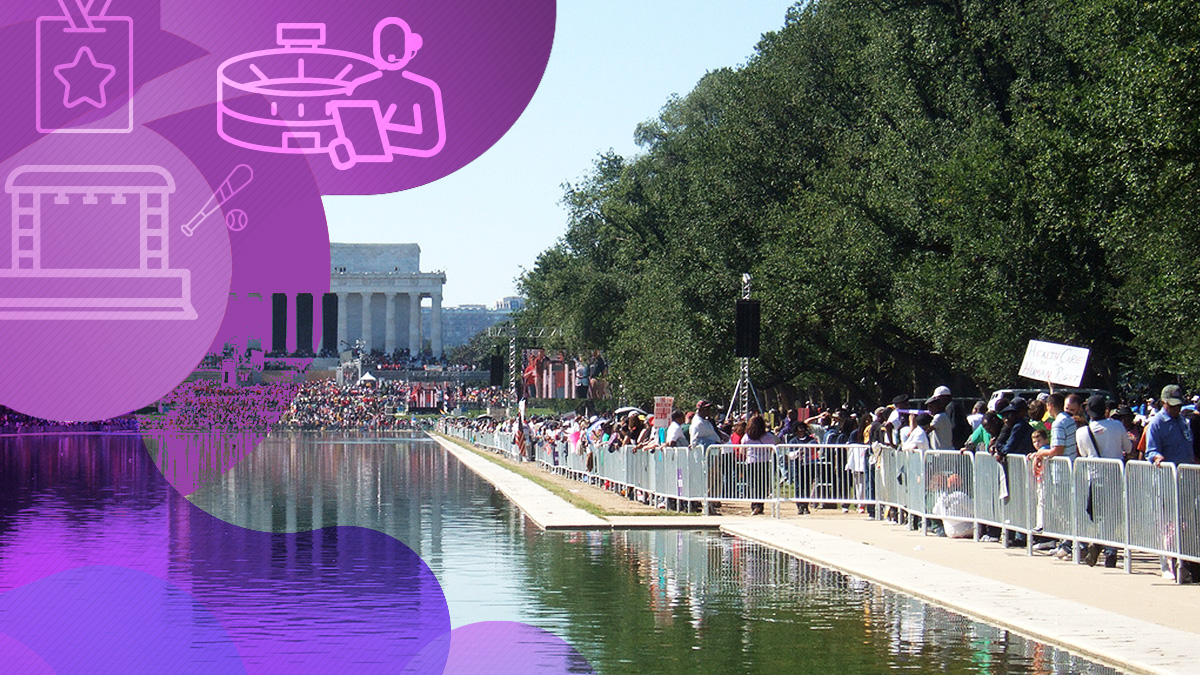
Barriers do the work that signage alone can't. Positioned correctly, they remove ambiguity. If a barrier blocks the left and right, attendees naturally continue forward along the intended path. Crowd management barriers are especially useful for queue lines, stage perimeters, restricted zones, and channeling foot traffic away from vehicle or service areas.

Staffing and Responsibilities

Large events need a layered staffing model. Security personnel should handle bag checks, enforcement, and confronting unruly guests. Event staff and ushers should handle questions, directions, and general guest assistance. Keeping these roles separate means neither group is stretched too thin or asked to do work they aren't trained for.

Emergency Procedures

Every plan needs a documented response for worst case scenarios: fire, severe injury, active threats, or structural failure. This includes evacuation routes, assembly points, staff roles during an emergency, and how the crowd will be notified. These procedures should be written down, shared with local first responders in advance, and rehearsed, not improvised in the moment.

Weather and Other Event Specific Risks

Outdoor events add another layer of risk: lightning, extreme heat, high wind, or sudden storms can all force a rapid change in crowd behavior. Build weather thresholds into the plan (for example, at what wind speed a tent or stage structure gets cleared) and identify shelter locations in advance.

How to Create a Crowd Management Plan

  • Building a plan is a sequence, not a checklist to fill in randomly. Following these steps in order helps surface problems while they're still cheap to fix.
  • Assess the venue. Walk the space (or review architectural plans) to identify capacity limits, chokepoints, and natural flow patterns before making any other decisions.
  • Identify risks. List what could go wrong based on the event type, crowd size, venue, and season, from a stage rush to a severe weather event.
  • Map attendee movement. Plan the full journey from arrival to departure, including parking, transit drop off, entry, circulation inside the venue, and exit.
  • Determine equipment needs. Decide where barriers, signage, fencing, and staging are needed based on the flow map and identified risk areas.
  • Assign staff. Match staffing levels and roles, security versus guest services, to the specific pinch points and risk areas identified earlier.
  • Establish emergency procedures. Document evacuation routes, assembly points, and communication protocols, and share them with local authorities and first responders.
  • Brief the team. Walk every staff member through the plan, their specific role, and how to escalate issues before doors open.
  • Monitor and review. Track how the plan performs in real time, adjust on the day if needed, and debrief afterward to improve the plan for future events. 

Common Crowd Management Planning Mistakes

  • Planning too late. Crowd management bolted on after the layout, staffing, and ticketing are already finalized leaves little room to fix structural flow problems.
  • Treating every crowd the same. A plan built for a seated conference doesn't hold up at a general admission concert or a rivalry sports game. The crowd's behavior has to shape the plan.
  • Underestimating exit capacity. Entry points get the most attention, but exits need to handle the same volume, faster, and under emergency conditions.
  • Skipping outside stakeholders. Leaving out local authorities, transportation providers, or emergency services until the last minute creates avoidable coordination gaps.
  • Blurring staff roles. Asking ushers to handle confrontations, or security to manage guest questions, slows down both functions and leaves gaps in coverage.
  • No rehearsed emergency plan. Having an emergency procedure on paper isn't the same as staff knowing their role in it. Untested plans tend to fail under real pressure.
  • Relying on signage alone. Signs help attendees who are already looking for direction. Barriers and staff presence are needed to manage attendees who aren't. 

FAQs

What is crowd management at an event?

Crowd management is the planning and physical measures used to keep attendees safe and moving efficiently through a venue, including layout planning, signage, barriers, staffing, and emergency procedures.

What is the difference between crowd management and crowd control?

Crowd management is proactive planning to prevent problems, such as layout, flow, staffing, and signage. Crowd control is the reactive response used once a crowd is already gathered and needs to be directed or contained, often using barriers and security staff.

How far in advance should crowd management planning start?

Planning should begin as early as the event is confirmed, ideally alongside venue selection, so that layout, capacity, and stakeholder coordination can shape decisions rather than react to them.

Who should be involved in crowd management planning?

A complete plan typically involves venue management, event organizers, security contractors, local authorities, and transportation providers, since each affects a different part of attendee flow and safety.

What equipment is most commonly used for crowd management?

Crowd control barriers, directional signage, PA systems, and information desks are the most common tools, often combined with fencing to secure venue perimeters and restricted areas. 

How SONCO Supports Safer Event Planning

SONCO has spent 50 years helping event organizers, venue managers, and municipalities plan and equip safer crowds, from barrier rentals to perimeter fencing and site layout guidance.

Whether you're planning a rock concert, a marathon, or a community festival, our team can help you match equipment to your specific flow, capacity, and risk profile.

Contact Sonco Perimeter Security for help planning your next event, or request a quote on crowd management barriers and equipment.