






Custom-Printed Fence Screens: Uses, Benefits & What to Look For

Nick Criscuolo, December 9, 2021
Read more about the author


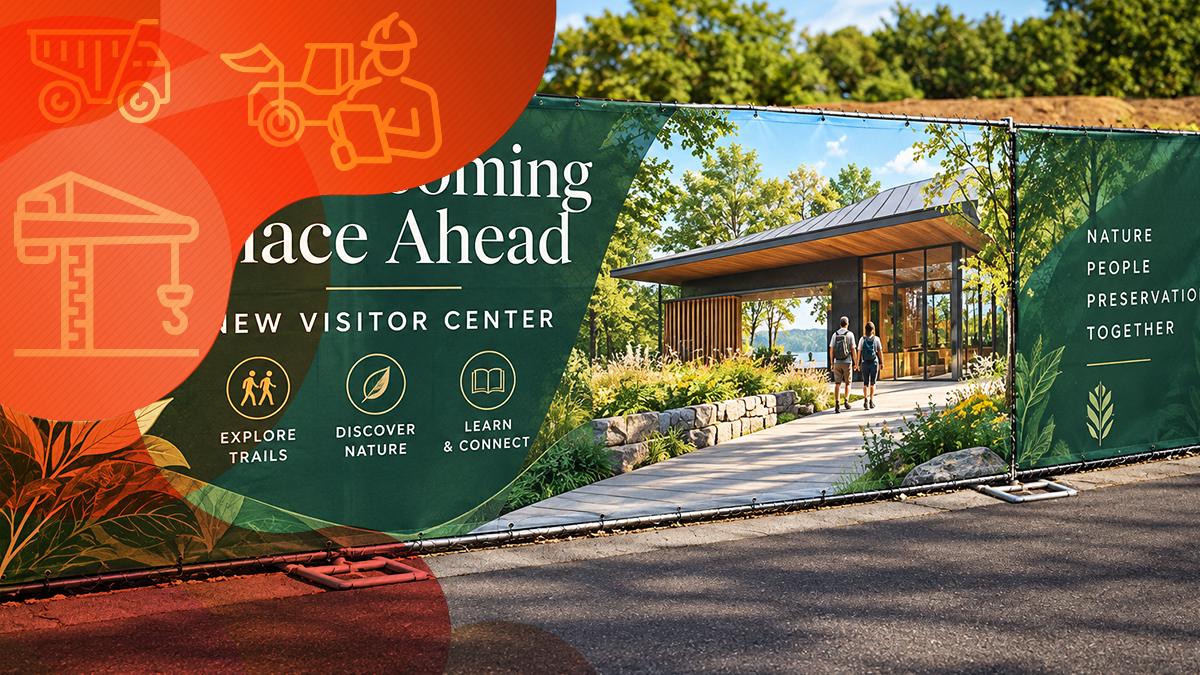
A custom-printed fence screen is a fabric or mesh panel that attaches to chain-link or temporary fencing and displays your graphics, text, or artwork. It turns an open perimeter into a screened, branded, and informative one, and it does so without changing the fence itself.
Construction managers, event organizers, and municipal teams use printed screens to add privacy, manage dust and debris, and share safety and project information with the public.
They also use them to give an otherwise plain fence line a professional look. Because screens are made to your fence dimensions, the same fence can carry a logo, a project rendering, sponsor ads, or a full mural.
This guide explains who uses printed fence screens, what benefits they offer, what you can print, how to choose the right material and specs, and how to order from SONCO.
Key Takeaways
-
Custom-printed fence screens combine privacy, perimeter screening, and visual communication.
-
Mesh, poly, and vinyl offer different levels of airflow, privacy, durability, and print quality.
-
Screens can display logos, safety messaging, project information, sponsor advertising, and artwork.
-
The right screen depends on the fence type, dimensions, blockage requirements, wind conditions, and intended use.
-
Custom printing can turn unused fence space into branding and communication space.

Who Uses Custom-Printed Fence Screens?
Custom-printed fence screens are used across a wide range of industries and project types. If you have a perimeter fence and want it to work harder for you, a printed screen likely has an application for your needs.
- Construction companies: The most common use case. Screens secure job sites, protect pedestrians from dust and debris, and display brand messaging or project timelines to the public.
- Event organizers: Concerts, festivals, sporting events, and outdoor markets use printed screens to create branded perimeters, direct crowd flow, and display sponsor logos.
- Municipal governments: City agencies use fence screens around roadwork, utility projects, and public construction to communicate project timelines, safety information, and public notices.
- Schools and universities: Campus construction or renovation projects use screens to maintain a safe, professional environment while minimizing disruption to students and staff.
- Retail and commercial developers: Project fencing around storefronts and commercial builds can carry brand messaging, opening-date countdowns, or teaser imagery of the finished development.
- Venues and arenas: Temporary fencing at large venues benefits from custom screening to reinforce branding, manage sight lines, and display safety protocols

7 Benefits of Installing a Fence Privacy Screen
Fence screens do far more than cover up an ugly chain-link perimeter. Here’s a breakdown of the practical and strategic advantages they deliver.
1. Wind & Debris Protection
Open fencing offers no barrier against wind-driven debris, dust storms, or airborne particulates: all of which pose real risks to workers and passersby.
Mesh, vinyl, or poly fence screen acts as a physical wind buffer, reducing the speed of gusts that reach your site and intercepting loose materials before they become projectiles.
The level of wind resistance depends on the fabric you choose: mesh provides breathability with moderate blockage, while heavier vinyl options offer significantly greater protection.
2. UV & Shade Coverage
Extended sun exposure is a serious occupational health concern for outdoor crews. Custom fence screens provide a layer of UV protection along your perimeter, reducing direct sun exposure for workers operating near the fence line.
Depending on the material density and color, screens can also create shaded zones that lower ambient temperatures in high-heat environments: a tangible benefit on summer job sites.
3. Privacy & Security
Opaque fence screens prevent outsiders from viewing your equipment, materials, or work-in-progress — reducing the risk of vandalism, theft, and unauthorized access.
For projects where the finished product is meant to be a surprise (a new retail location, a renovated public space, a stadium expansion), screens keep the reveal intact. Privacy screens are particularly valuable on urban sites surrounded by foot traffic and commercial activity.
4. Brand Visibility & Marketing
Every linear foot of fence is a potential billboard. Custom-printed screens transform idle perimeter space into high-visibility marketing real estate — displaying your company logo, tagline, project name, and contact details to thousands of daily passersby.
Unlike digital ads that can be scrolled past, a fence screen is unmissable and operates 24 hours a day for the full duration of your project. For companies looking to build name recognition in a specific neighborhood or market, few advertising channels offer comparable reach at the cost.
Research from the Out of Home Advertising Association of America underscores why this matters: 75% of consumers report that excessive digital screen time is causing them to tune out online ads — while appetite for real-world, outdoor experiences and messaging continues to grow. Physical, print-based advertising in high-traffic locations is seeing renewed attention as a result.
5. Sponsorship & Revenue Opportunities
Your fence doesn’t have to advertise only your own brand. Construction sites and event perimeters in high-traffic areas represent attractive advertising inventory for local businesses and sponsors. By selling sections of your fence screen to sponsors, you can offset the cost of the screen itself — or generate net positive revenue from your perimeter.
This approach is common at large events, city-center construction projects, and sporting venues where foot traffic and visibility are high.
6. OSHA-Compliant Safety Signage
Managing multiple individual safety signs across a job site: each with its own hardware, weathering at different rates, and becoming misaligned over time — is a logistical burden. A custom fence screen consolidates your required safety messaging into a single, cohesive, OSHA-compliant display.
7. Community Goodwill & Aesthetics
Construction zones are a frequent source of frustration for neighboring residents and businesses. Unscreened fencing exposes messy staging areas, accumulating debris, and disorganized equipment — none of which generates goodwill with the surrounding community. A clean, professionally printed fence screen signals that your company takes pride in its work and respects the neighborhood.
Screens can also display project information (expected completion dates, project descriptions, contact information) that gives community members a sense of transparency and keeps concerns from escalating.

What Can You Print on a Fence Screen?
SONCO's in-house creative team works with your high-resolution artwork and design goals to produce durable, photo-quality prints for outdoor use. Popular content types include:
- Safety signage: PPE requirements, hazard zones, emergency contact numbers, and site-specific warnings, consolidated in one print run.
- Branded graphics: Your logo, colors, tagline, website, and phone number.
- Informational content: Project details, expected timelines, renderings of the finished build, and client or community messages.
- Sponsor advertisements: Sections of the fence allocated to local sponsors or project partners, similar to the event signage ideas used to display sponsor logos and wayfinding at large events.
- Artwork and community murals: Original artwork that reflects the neighborhood or previews the completed project.
How to Order a Custom Fence Screen from SONCO
Ordering is straightforward, and our team guides you through each step:
- Share your specs. Tell us your fence dimensions and the type of fencing you're screening (chain-link, temporary panels, etc.). This determines the screen size and attachment method.
- Choose your material. Pick mesh, poly, or vinyl based on your privacy, wind, and print quality needs. Our team can recommend an option for your project type and location.
- Submit your artwork, or let us design it. Send high-resolution logos and graphics. SONCO offers free design services, so if you don't have finished artwork, our creative team will build a professional layout optimized for large-format fence printing.
- Review your free proof. Before anything is printed, we send a digital proof for your review and approval.
- Production and delivery. Once you approve the proof, your fence screen is produced with weather- and wrinkle-resistant finishes and no-fade graphics, in your choice of material and color. We ship directly to your site.
How to Choose a Custom-Printed Fence Screen
The best screen depends on what you need it to do and where it will be installed. Work through these six factors to find the right privacy fence screen for your fence line:
- Application. Decide the main purpose first: privacy, branding, safety messaging, sponsor advertising, or a mix. A construction site that needs full visual screening has different needs than an event perimeter that only needs branded visibility.
- Material. Choose mesh, poly, or vinyl based on the balance of airflow, privacy, and print quality you need (see the comparison table below).
- Blockage. Blockage is the percentage of the screen that blocks light, wind, and views. Higher blockage means more privacy and more wind load on the fence. Lower blockage lets more air through.
- Wind conditions. In windy locations, airflow matters. Mesh screens let wind pass through, which reduces the load on the fence and its bases or posts. Solid materials catch more wind and may need extra bracing. Talk to your provider about your site conditions.
- Dimensions. Screens are made to size, so you need the fence length and height. Measure the sections you want to cover, not just the total run.
- Attachment. Confirm the fence type (chain-link, temporary panels, or another style) so the screen ships with the right grommets, hems, and attachment method.
| Mesh | Poly | Vinyl | |
| Airflow / wind | Highest airflow; lowest wind load | Moderate | Lowest airflow; highest wind load |
| Privacy | Partial (see-through at close range) | High | Full (opaque) |
| Blockage | Lower | Mid-range | Highest |
| Durability | Lightweight, suited to breezy sites | Balanced mid-weight option | Heavy-duty, long-lasting |
| Print quality | Good; images can look less crisp because of the open weave | Very good | Sharpest, most vibrant |
| Best for | Windy sites, long fence runs, sites that need airflow | General construction and event use | Full privacy, detailed graphics, murals, high-visibility branding |
How to Design an Effective Fence Screen
Fence screens are read from a distance and often at a glance, so clear, simple design works best. These sign design tips apply to fence screens just as they do to any large-format signage.
- Keep the message short. Use a strong headline, your logo, and one call to action, such as a website or phone number.
- Design for distance. Use large type, high-contrast colors, and enough white space that people walking or driving past can read it.
- Use high-resolution artwork. Send vector logos or high-resolution files. Low-resolution images look blurry at large sizes.
- Plan for the fence. Keep key text away from seams, edges, and gates, and consider how the design will repeat across multiple panels.
- Prioritize by purpose. If safety messaging is required, place it where it is easy to see, and don't let decorative artwork compete with it.
- Leave room for sponsors. If you plan to sell sections, define the spaces up front so logos display evenly.
Frequently Asked Questions
What is a custom-printed fence screen?
A custom-printed fence screen is a fabric or mesh panel, made to your fence dimensions, that attaches to chain-link or temporary fencing and displays printed graphics or text. It is also called a fence privacy screen, windscreen, or fence cover. Screens add privacy, branding, safety messaging, and a finished look to a perimeter fence.
What blockage percentage should I choose for a fence screen?
Choose based on privacy needs and wind exposure. Higher blockage gives more privacy but catches more wind, so it suits sheltered or well-braced fences. Lower blockage, like mesh, lets air pass through and suits windy sites. If you're unsure, share your site conditions with SONCO and we'll recommend a material and blockage level.
How do I measure my fence for a custom screen?
Measure the length and height of each fence section you want to cover. Note the fence type (chain-link or temporary panel) and any gates, corners, or breaks in the run. Our team can confirm the final screen size and attachment method from your measurements.
Do I need to provide my own artwork?
No. You can send high-resolution logos and graphics, or use SONCO's free design services and our creative team will build the layout for you. Every screen gets a free digital proof for approval before printing.
Turn Your Fence Line Into a Functional, Branded Space
Your fence already surrounds your site. A custom-printed screen makes it work harder by adding privacy, communicating safety and project information, promoting your brand, and giving the public a better view of your work. Whether you need a simple logo on a mesh screen or a full-color mural on vinyl, the right screen turns idle perimeter space into a useful one.
Ready to get started? Request a quote and our team will help you choose the material, confirm the specs, and design a screen for your project.
Trend now

Temporary Fence Rental Lifespan: Tips to Make Your Fence Last Longer
Learn the storage habits that extend the lifespan of every panel.

How to Manage a Crowd at an Event: A Complete Guide for Event Managers
Learn how to manage a crowd at an event with proven strategies for planning, signage, barriers, staffing and more.

How to Install a Mesh Chain-Link Fence: Step-by-Step Guide
Learn how to install a mesh chain-link fence step by step.
Search for category
Request a quote now! 